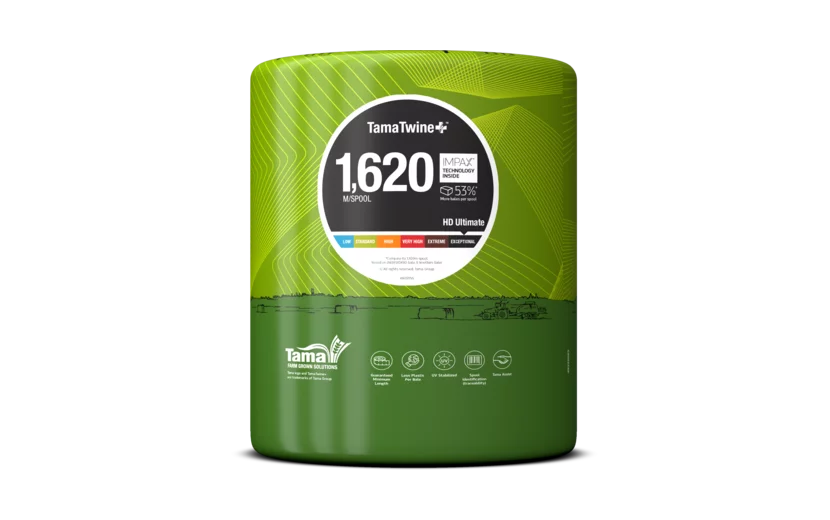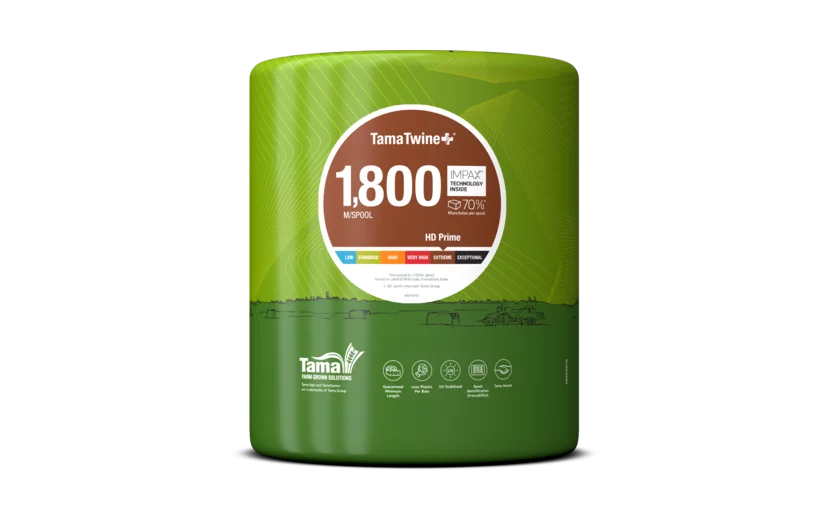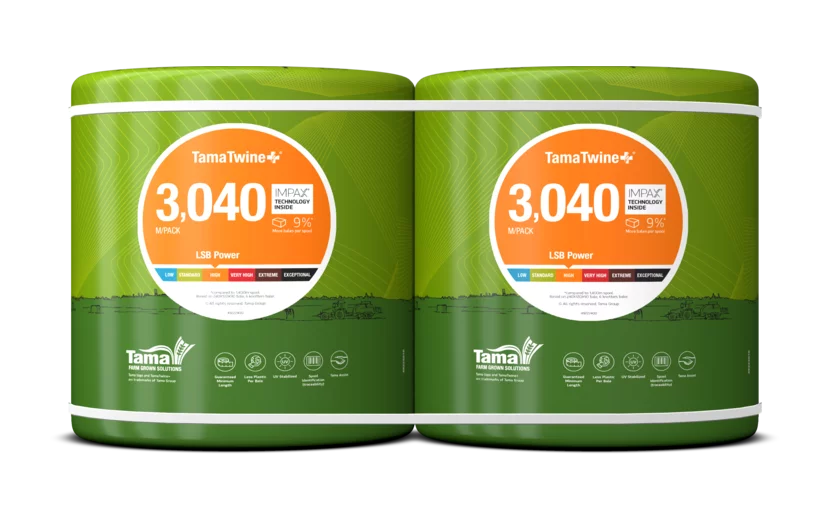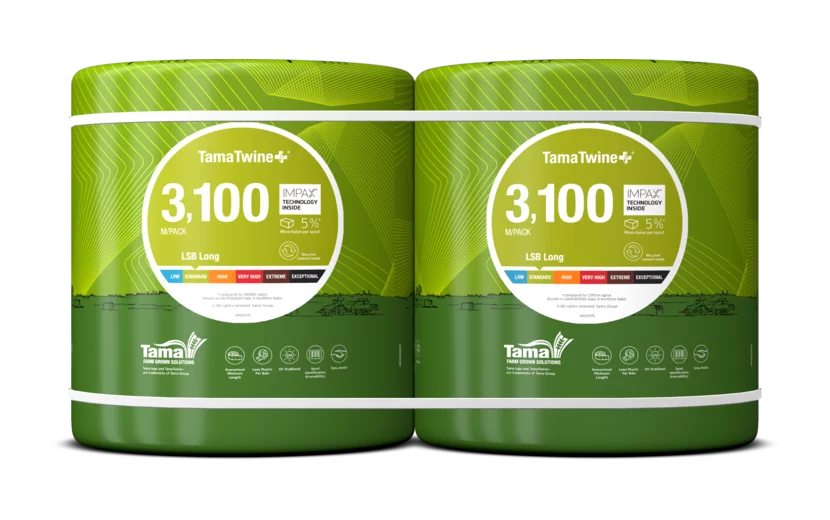

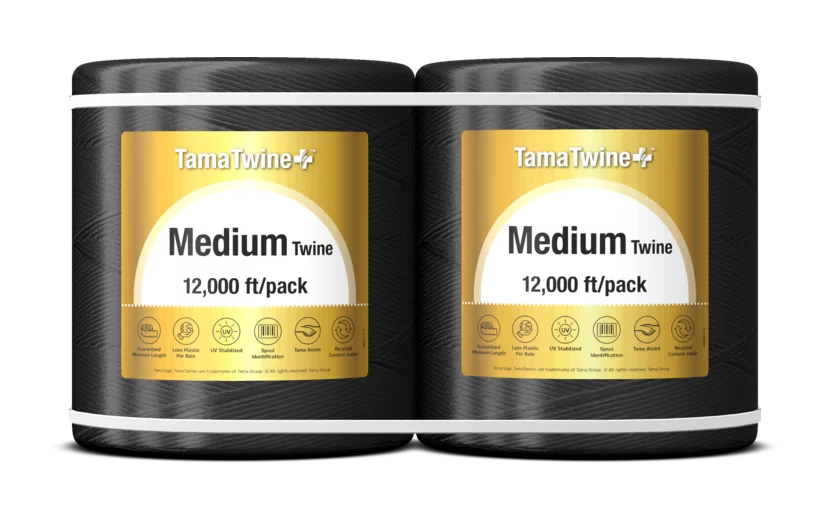
Tama Medium Twine

Length:
3,658 M

Covering all bale types.
The Tama name is recognized around the world for quality in Crop Baling products, bringing the reassurance and confidence of quality and innovation and giving the best option to secure your valuable crop.
Manufactured to the highest specifications and tolerances, with 100% virgin polymers, the TamaTwine™ product range covers all twine types. From the lightest twines to the heaviest, there is a twine to suit your needs.
Our range of twines includes premium medium and fine twines for small square balers and round balers.
Armed with Tama’s+ Technology, these twines will guarantee efficient, trouble-free and non-stop baling.
Tama Medium Twine Black

Specifications

Product Name Length Height Diameter Colour Units per Pallet Selling Unit
Tama Medium Twine
3,658 M
260 MM
225 MM
BLACK
80
Pack
Product Name
Length
Height
Diameter
Colour
Units per Pallet
Selling Unit
Tama Medium Twine
3,658 M
260 MM
225 MM
BLACK
80
Pack

1 Products


Contact your local Tama representative

Choose your category and County

Results (0) View all experts

More ways we can assist

Service Request Icon

Service Request

Knowledge Centre Icon

Knowledge Centre

Training Icon

Training

Field Experts Icon

Field Experts

Questions about Twine?

We’ve got the answers

Questions about

Twine Baling Tips
Large Square Baling
Very careful attention should be paid to the bale pressure, depending on the type and condition of the crop being baled. During periods of extended dry and hot weather, for instance, straw bales may be noticeably lighter than during normal conditions, with the baler set to the same bale pressure setting.
In these circumstances, a decrease in pressure setting will overcome this; or, alternatively, a move to the next heavier twine is recommended.
For baling good quality large square silage bales, it is important to follow a few simple guidelines:

Ensure the crop has wilted to a minimum of 40 – 50% dry matter (DM), which will produce well-formed bales as well as excellent fermentation.
Ensure the twine box tension is reduced as much as possible, as twine friction experienced between silage bales during baling is much greater than between straw bales.
Eliminate as much air as possible from the crop when baling, as it is essential that sufficient crop is packed into the top of the bale to avoid misshapen bales being formed, which may be difficult for an automatic bale-wrapper to handle properly. A reduction in forward speed will help to achieve this by increasing the number of wads per bale.