

Why Choose Maize? A Guide to Benefits, Growing and Baling for Silage
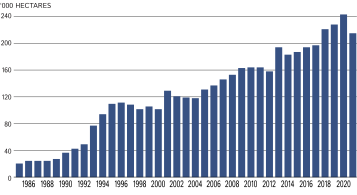
Maize crops have long been part of the UK farming landscape. But the area planted to maize, particularly for silage, has increased dramatically over the years.
Part of the reason for this uptick in popularity is the wider geographical range offered by new varieties that are cold or drought tolerant, or early maturing. There’s also the value of maize as a break crop for controlling plant disease and supporting soil health.
Another important factor is the increased yields from dairy cows and beef cattle when maize silage is included as part of the ration.
Nutritional and yield benefits of maize silage
The Agriculture and Horticulture Development Board (AHDB) lists maize as a crop that provides:
- High starch and energy
- High palatability
- Higher dry matter intake (DMI) potential than pure grass silage
Meanwhile, research on supplementing with maize silage as feed shows clear production gains in dairy cows. Switching out just 33% of the grass silage ration for maize silage boosts milk production from 21.4 to 23 kg per day.
The same goes for finishing beef cattle, where maize silage has been shown to support liveweight gains of 1.3–1.5 kg per day, while also reducing reliance on concentrates.
It’s worth noting that maize silage is naturally low in protein. So high-protein feeds, such as rapeseed meal, should also form part of the ration for proper nutrition.
Sowing and growing maize
When to plant
Forage maize should only be drilled once soil temperatures are consistently warm enough. That means above 8°C for five consecutive days, measured at a depth of 8–12 cm. This typically occurs from mid April through May. If planting in a less favourable climate, you may need to drill maize under degradable film to ensure the soil is warm enough.
Site considerations
Maize prefers south facing, sheltered sites for optimal growth. If drilling on a north facing slope, consider early maturing varieties. Ensure the soil has good moisture reserves and isn’t too heavily compacted, as compaction restricts root development and limits nutrient uptake. Correct pH is also important: pH 6–6.5 is ideal.
Crop nutrition
Making good maize silage starts with providing the right nutrients to the crop. Nutrient shortages will restrict yield and growth. The most important nutrients include:
- Nitrogen: Important for both quality and yield. Note that excess nitrogen can be as detrimental as insufficiency
- Phosphorus: Ensures proper root development and nutrient uptake
- Potassium (potash): Essential for all aspects of healthy crop development
- Additional elements: Sulphur and magnesium are also important to maize development, as are some trace elements
For the most part, these nutrients can be provided through the right combination of slurry and fertiliser. But it’s worth noting that care should be taken not to increase soil levels of potassium and phosphorus too much, as this can have a negative impact on crop nutrition. The Potash Development Association gives additional guidance on the right levels.
Growing maize across the UK
In general, maize can be grown across large areas of the UK. For England specifically, the AHDB advises that “Most of England is suitable for growing maize for silage, with only areas in the far north and the wetter, more exposed west regarded as ‘marginal’.” Specific regions of Scotland, like the southwest, are also suitable for maize production.
That said, recent weather conditions have affected maize harvests, and it’s worth taking this into account when planning your crop. Colder summers in Scotland, for example, have made maize farming more challenging in recent years.
Meanwhile, warm, rainy conditions in Northern Ireland have led to bumper crops in recent years, even as other parts of the UK have suffered poor harvests due to hot and dry growing seasons.
To increase the chances of a strong harvest in your area, we recommend consulting the to select a variety that suits local conditions.
Harvesting maize
The ideal time to harvest maize is when the crop’s DM (dry matter) content is 28–35%. This can be assessed using a microwave/oven test:
- Cut up a sample of crop material.
- Weigh it while wet, then dry it in an oven or microwave.
- Weigh the sample at regular intervals. When the weight doesn’t change any further, the crop is dry.
- Now calculate: (dry weight ÷ wet weight) × 100%
Note: As the crop dries, there’s a risk of ignition, so be sure to check regularly. If using a microwave, place a cup of water next to the sample.
To test in the field, you can use the “milk line test”. This means sampling individual cobs and snapping them in half to see whether the line separating the “milky” bottom half of each corn grain and the solid top part is about halfway down the grain.
Ensure that you’re using the correct equipment and settings for harvest. Your forage harvester should be set for a chop length of 12–18 mm. Ideally, use a maize header that cracks the corn kernels during harvest. This improves nutrient availability and digestibility. These headers are pricey though, so if you’re not hiring contractors, you may need to consider other harvesting options.
Maize baling and maize silage
The final step is turning your harvest into silage. Maize is harvested and baled as a whole crop (i.e., with stems, leaves and cobs), so ensure you’re up to speed on best practices for baling whole crop silage.
Among the most important considerations is creating the right conditions for fermentation. A completely oxygen-free (anaerobic) environment is essential, whether in the clamp or in round silage bales. This allows natural or inoculated lactic acid bacteria to get to work quickly fermenting the maize.
The faster this step happens, the better. Ensiling your crop within 48 hours (preferably much faster) helps lock in energy and nutrients because you lose less sugar and starch to undesirable, oxygen-loving microbes.
If you’re making round silage bales, high quality stretchfilm is a must at this stage. Products like Tama’s Polybale Pro Stretch Wrap offer the best combination of efficiency, strength, and tear resistance to ensure the hard work of growing and harvesting your crop doesn’t go to waste.
Additional help with maize farming, baling and silage
There’s a lot more to maize than any single blog can cover, but the information above should get you off to a good start. For more on growing maize, we recommend consulting the AHDB knowledge library and their in-depth maize grower’s guide.
For advice on maize baling and silage, reach out directly to Tama Assist. Our friendly team is happy to walk you through your best baling options.